The Proust Plan
History of the Proust Plan (1944), an intelligence plan derived from Plan Sussex. 1944 OSS / BCRA
Credit: text published with the friendly permission of Mr. Serge Larcher (as noted on the original page).
Contents
History
The Proust Plan was an ad-hoc initiative decided in January 1944, at a time when Plan Sussex—launched months earlier—had already entered its operational phase. As a complementary plan, the first men selected for Proust were drawn from the surplus manpower recruited for Sussex.
In early 1944, the American high command—expecting major difficulties after the landing—wanted to increase the number of intelligence teams operating in France. Future missions were not yet clearly defined, but the scale of the invasion implied that urgent needs would arise that Sussex agents might not be able to cover.
The OSS therefore sought to use the surplus Sussex manpower, supplemented by new BCRA recruits from North Africa. A secret note (No. 379D/BCRAL) dated 11 February 1944, issued by BCRA-London, informed the Algiers office of the plan and set out its main principles.
Note for Captain Landrieux:
“The American authorities informed me of the creation, alongside the tripartite Sussex and Jedburgh plans, of a Proust Plan intended to prepare around fifty agents, with a view to sending them by infiltration or parachute behind German lines after a bridgehead is established in France. This is a Franco-American bipartite plan known to the British, who do not take part in it. Colonel Neave of the U.S. Army is in charge. A telegram has already been sent to Algiers to announce this new plan and request the necessary personnel. The Americans intend to use agents who were rejected at the tests. Attached is an initial list of personnel to be recovered. Please indicate where this personnel is, and halt any reassignment to their original branches for rejected elements from the various plans until they have been reviewed by Colonel Neave. The Americans have provided us with a house and instructors and are ready to receive volunteers from 1 March 1944. The Proust Plan is an intelligence-gathering plan.”
Signed: Major Manuel, head of BCRAL
Three weeks later, another note (DGSS/BCRAL No. 1834/GA/EM/S/A), dated 6 March 1944 and also signed by Major Manuel, provided further details, stating that U.S. special services requested 50 volunteers (or more) for use from D-Day onward. It defined Proust as a derivative of Sussex focused primarily on intelligence, while not entirely excluding action.
In March 1944, recruitment in North Africa continued for Proust. Volunteers arrived in England in small groups or individually. Some embarked from Algiers on 6 March, landed at Liverpool on 17 March, and underwent the usual security formalities.
The plan’s build-up faced difficulties: volunteers were “lost” between Algiers and London; others were reassigned upon arrival to roles unrelated to Proust. Some candidates were ultimately rejected due to insufficient level. Proust struggled to take shape because Sussex—already operational—absorbed most resources and retained priority for training, equipment and transport.
Lieutenant-Colonel Booth, in “Mission Proust – The story of an unusual OSS undertaking” (Dorrance & Company, Philadelphia), described morale issues among men who felt like a “holding pen” for surplus Sussex agents.
“There was a problem with agents already recruited for Plan Sussex who were set aside due to excess numbers… They felt frustration and uncertainty about whether they would ever be used in this new plan… causing discouragement and some discipline problems.”
Some even joked that the uncertainty over the Proust plan’s use was the origin of its code name—by analogy with Proust’s In Search of Lost Time. This was false, as the name had been chosen earlier, but it gives an idea of the tense early atmosphere (see Note (1)).
A firm reorganization proved necessary; morale improved rapidly only after the parachute course at Ringway. By mid-April, training for about fifty selected agents could finally begin.
Training
As Sussex deployments in France progressed, American instructors were freed up and could devote themselves to Proust. Agents from both plans received the same training.
Training took place at Drungwick Manor (code name Area B), a residence dating from the 13th century and restored in the 19th, owned by Gilbert Miller, a well-known American theatre producer. Instructors were housed in the manor (mess and administrative services as well), while trainees lived in tents in the park, which was also used for sports, shooting, close combat, and explosives handling.
Weekly reports by Commander Dutey (French deputy to Colonel Neave) mention exercises and cooperation with British services: preparation of individual cover stories, radio courses, driving various vehicles, weapons study, identification, etc.
By 21 May, Proust had 65 men. On 7 June, Lieutenant-Colonel Booth took command of the Freehold school; Neave was recalled to OSS London. Dutey’s notes indicate that the number of men completing the full course never exceeded 65.
Not all completed training, and some only passed through briefly. Fourteen agents were reassigned to Plan Sussex (including Guy Mocquet and Lucien Bignon—mission “Daru”—and Mario Faivre—mission “Velours”). Counting liaison officers, the French total who could claim to have passed through Proust likely remained below 80.
Missions were mostly deployed by parachute, with a few exceptions (OSS maritime section by PT boat; and a couple of teams dropped by aircraft landing).
Proust missions
“Giraffe”
The first mission, “Giraffe,” was also the only one to suffer the loss of an agent: Joseph Michel Jourden, alias Jean-Marie Stur. Initially engaged under Sussex, then integrated into Proust, he was clandestinely landed with Jean-Marie Robleu (Robert Reitzer) near Morlaix on 25 June 1944 to transmit intelligence to London on German forces, positions, and equipment.
“The giraffe has laryngitis” was the coded phrase used by Radio London to indicate a message for him.
“Midiron” (a typical Proust operation)
Working with the maquis, deployed agents were tasked with reporting German movements retreating toward the Belfort Gap. The mission leader was Jean-Paul Bougier (aliases Bricard / Bartholdi). The mission parachuted on 12 July 1944 at Doaudic (Indre), to track and report enemy convoys in several sectors.
Several teams were involved:
- “Saniette” — Jacques Suissa (aliases Jacques Grenier / Saniette), parachuted 12 July at Doaudic (with Bernard Duval, alias “Charlus”).
- “Congé” — Georges Cordeau (alias Courtois), parachuted the night of 7–8 August; contact with maquis near Limoges; intelligence in Angoulême and Poitiers.
- “Poil” — René Gros (alias Bordenave); intelligence leading to a U.S. Air Force bombardment of a major enemy troop concentration.
“Midiron” agents transmitted 151 messages to Station Victor (OSS center in England), which were analyzed and forwarded to the U.S. 7th and 9th Armies.
Other operations (overview)
- “Jambon” — Jean Deschamps (alias Alain Aymard), parachuted 1 July; set up an intelligence network.
- “Mirnaloy” — Observer Ablard, parachuted 10 July; worked around Baccarat.
- “Commis / Mayfair” — Observer Bazin; mission in North-East France; field selection and reception committee.
- “Jument” — Observer Maillet and radio operator Wateau, parachuted 16 August near Montluçon; equipment destroyed on landing; returned to Paris 12 September.
- “Bébé” — Observer Bernard Sabouret Garat de Nedde (alias Bernard Lenormand) and radio operator Michel Faivre (alias Montigny), parachuted 30 August.
- “Chat” — Observer Raymond Marmande (alias Jacques Larcy) and radio operator George Brana (alias Georges Bussy), parachuted 30 August (same mission as “Bébé”).
- “Image” — Observer Robert Dupaix (alias Robert Dugay) and radio operator Ferry; parachuted night of 1–2 September near Rambervilliers (with Sussex team “Velours”).
- “Marcel” — larger team (U.S. officers plus French liaison), without radio; messages sent by courier; intense intelligence activity; provided the U.S. 7th Army with German situation near Baccarat.
Conclusion
By late summer 1944, the American bridgehead was considered strong enough for Allied special services to end Proust and Sussex missions. Proust had been used after the Normandy landing as a reservoir of intelligence agents for operations Sussex could not cover.
At the end of August, the small number of men still training at Drungwick Manor were sent to France and assigned to SI/OSS field detachments accompanying U.S. armies, or to the OSS base in Paris. Many returned to the DGER and were offered further assignments.
Sussex, Proust, Jedburgh personnel took diverse paths, including security screening centers for prisoners and deportees, counter-intelligence, and later missions. Some were deployed to the Far East (Commando Conus, Force 136, Kay2…).
Documents
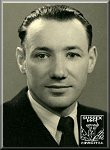
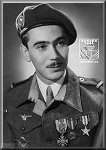
Selected agents involved in the Proust Plan
Note (1) — Origin of the name “Proust”
To fully understand the origin of this unusual code name, it should be noted that it was given by Colonel Justin O’Brien (OSS), responsible for Sussex and Proust training. A professor of French in the United States (Columbia University), he was recognized as a specialist in French literature in general and in Proust in particular, and had in fact translated “In Search of Lost Time”…