Certificate of membership in the Free French Forces
Open PDF
Size: to be filled in
Joseph Michel JOURDEN
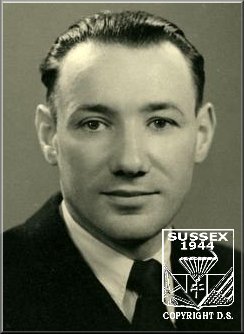
Born on 29 March 1911 in Le Conquet (Finistère). Son of Joseph Jourden and Marie Yvonne Lannuzel, farmers in Kéronvel, Joseph Michel Jourden was a State Navy sailor in Brest in 1940.
A transmission petty officer, he was captured by the Germans at the Brest Naval Prefecture while destroying his radio equipment (jaw fracture). Imprisoned in Germany at Stalag IV F in Hartmannsdorf (near Dresden), he was assigned to agricultural work.
Released in 1941, he rejoined the Navy in Toulon and was assigned to the Condorcet. During leave, he returned to Le Conquet on 7 August 1942. At the end of his leave, he did not return to Toulon but to the Admiralty in Algiers. After the Anglo-American landings in North Africa (8 November 1942), he decided to join Free France and managed to reach England.
In London, he underwent intensive training at the Praewood House School (St Albans) to carry out intelligence missions on French soil.
Enlisted under the Sussex Plan under the name Jean-Marie Stur, he was then integrated into the “Proust” group (Mission “Girafe”).
He was clandestinely landed by motor torpedo boat (MTB) with J.-M. Robleu (Robert Reitzer) in the Morlaix area, near Pointe de Beg an Fry, on 25 June 1944, in order to transmit to London information collected on the ground about the strength, positions and equipment of German troops likely to oppose the Allied forces that landed in Normandy on 6 June.
He evaded German direction-finding teams until 9 August 1944. According to the accounts reported, an isolated German column entered Plouigneau and several patriots were arrested and executed. The official French and American versions state that he was captured, tortured for several hours, refused to speak despite severe suffering, and was ultimately executed.
On the very day of the tragedy, Robert Reitzer informed the family of his death. His body was taken to his sister’s home in Morlaix. A detachment of American soldiers and FFI accompanied the funeral convoy to the cemetery, where military honours were rendered.
A commemorative plaque can be seen near the war memorial in Plouigneau. The main street in Le Conquet bears his name (decision of the municipal council dated 6 June 1945).
His body was first buried at the cemetery of Saint-Martin-des-Champs, then in Le Conquet. Marked “Died for France” (civil registry of Le Conquet).
Click to open a document (PDF) or view an image in full size.
Open PDF
Size: to be filled in
Open PDF
Size: to be filled in
Open image
Preview: thumbnail
Biography produced with the help of Mr Roger Coguiec, Joseph Jourden’s great-nephew.